
Walk into any serious gym and you will see leather and nylon cinched around waists of every size. This is nothing new. Weightlifting belts have a long history in the gyms and lifting.
Some strap it for every single exercise. I mean, it's hard not to laugh at the sight of them. Forearm curls? Belt on! Lat pull-downs? Belt on! Deadlifts? Of course, are you kidding me? Belt on! Maybe even two grip trainings? Well, can't do without my belt. Every time they set foot in the gym, they wear it like their lives depended on it. Then there are others who view with suspicion. These lifters somehow have come to believe that a belt acts as a crutch that supposedly creates a weak core.
Both extremes miss the point entirely. A weightlifting belt is neither an armored back brace designed to magically fix terrible mechanics, nor is it a shortcut that atrophies your abdominal muscles. Used correctly, it is one of the most reliable performance tools, whether you're a casual lifter or a serious power lifter.
What a Lifting Belt Actually Does and What It Doesn't
The Science of Intra-Abdominal Pressure (IAP)
Okay, let's address this first.
To understand what a belt does, you first have to understand how your body stabilizes under heavy spinal loading.
When you prepare to squat, deadlift, or press a heavy load, your brain initiates a natural stabilization reflex known as the Valsalva maneuver. You take a deep diaphragmatic breath, drawing air into your belly and lower ribs rather than raising your chest, and close your glottis (the vocal cords in your throat). As you contract your abdominal wall, oblique muscles, and pelvic floor against this trapped air, you create intra-abdominal pressure (IAP).
Think of your torso as an empty aluminum soda can versus an unopened, pressurized one: an empty, open can crushes easily when stepped on. A sealed, pressurized can will support an adult's body weight without buckling.
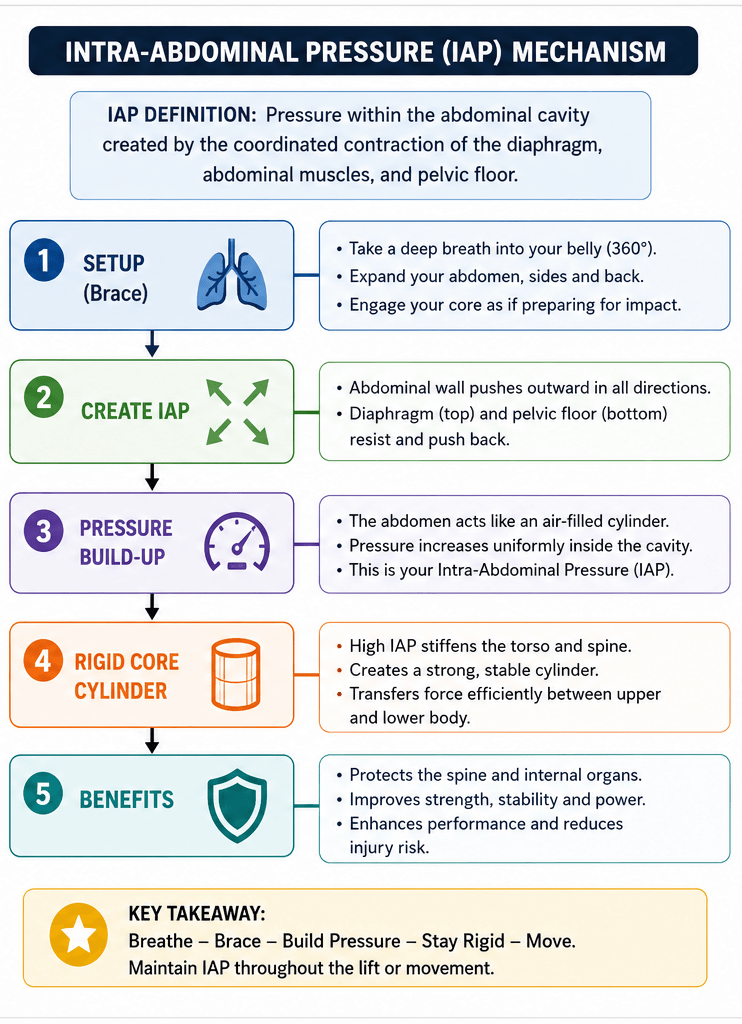
Contrary to the popular misconception, a lifting belt DOES NOT actively "hold you up" like a medical corset. Instead, it provides an unyielding external perimeter for your abdominal wall to expand against. In other words, this means you can be damn sure that without proper form you will get injured with or without wearing a belt.
When your core pushes against the rigid wall of the belt, your internal pressure spikes by 20% to 40% higher than without one. This rigid hydraulic cylinder stabilizes your lumbar spine, minimizes unwanted lumbar flexion under load, and increases prime mover recruitment in your hips and legs.
Debunking the "Weak Core" Myth
As mentioned earlier, the belief that using a belt makes your core weak has been thoroughly disproven by electromyographic (EMG) studies. Research measuring abdominal muscle activation (rectus abdominis, obliques, and erector spinae) during belted versus unbelted squats consistently finds that muscle activation is equal to or slightly higher with a belt.
Because the belt gives your nervous system proprioceptive feedback (something firm to push against), you can brace harder. You are training your abdominal musculature to produce maximum force against resistance.
When Should You Start Wearing One?
You do not need a belt on day one. Beginners should first learn how to brace naturally and execute compound movements with solid motor control.
Once you have established reliable mechanics and your working sets move past your body weight (roughly 1.2x to 1.5x bodyweight squats and deadlifts), adding a belt enables higher training volumes, greater bar velocity, and safer overload without technical breakdown.
2. Technical Anatomy: Materials, Thickness, Width, and Buckles
Lifting belts are not one-size-fits-all tools. The right belt for a 600 lb deadlift in a powerlifting meet will ruin your workout during an Olympic clean-and-jerk or high-rep CrossFit metcon.
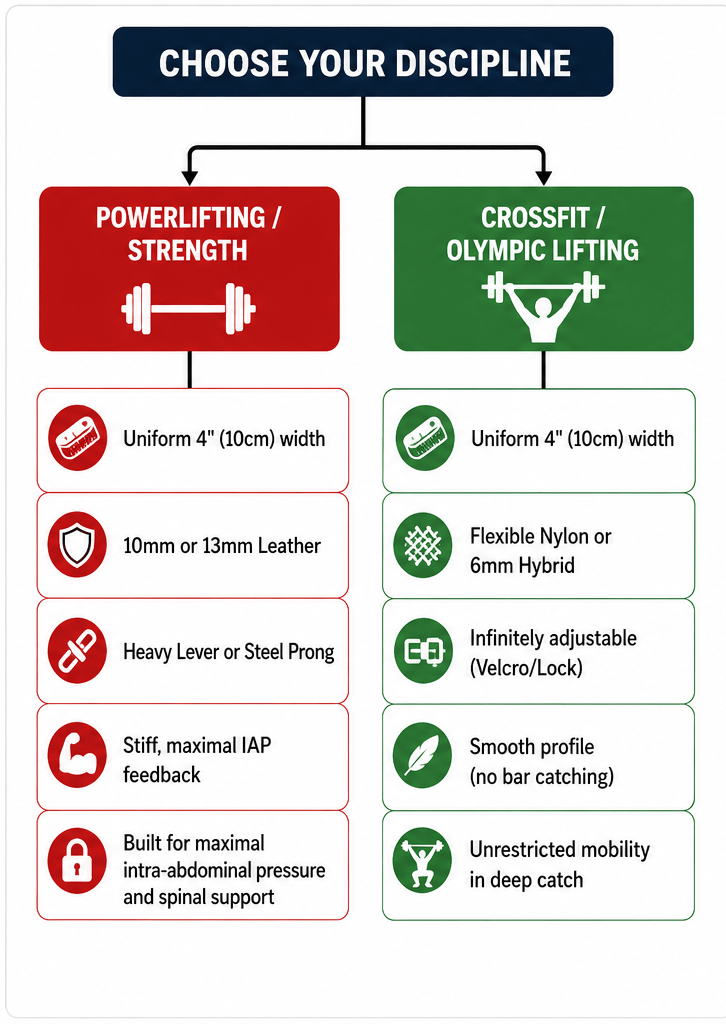
Material: Leather vs. Nylon
-
Sole Leather / Vegetable-Tanned Leather: The gold standard for raw strength. Cut from thick cattle hide, leather provides maximum rigidity and minimal stretch under hundreds of pounds of pressure. It takes time to break in, but a high-end leather belt can last decades.
-
Nylon: Lightweight, flexible, and soft on the ribs. Nylon belts wrap with heavy-duty hook-and-loop Velcro and steel roller buckles. They do not match the sheer radial stiffness of 10mm/13mm leather, but they allow rapid transitions between movements and dynamic hip flexion in cleans and snatches.
Thickness: 6mm vs. 10mm vs. 13mm
-
6mm – 7mm: Common in hybrid belts or Olympic-specific leather belts. Highly pliable from day one, offering good tactile feedback without digging into your hips.
-
10mm: The sweet spot for 85% of lifters. Thick enough to handle world-class powerlifting loads, yet supple enough after a short break-in period to contour comfortably to your waist.
-
13mm: The maximum legal limit for competitive powerlifting. Extremely rigid and heavy. A 13mm belt provides an immovable bracing wall but requires significant break-in and can bruise your ribs or hip crests if you have a shorter torso.
Width: 4-Inch Uniform vs. 3-Inch vs. Tapered
-
4-Inch (10 cm) Uniform: Standard width across powerlifting federations (IPF, USAPL, USPA). Supports the back and abdominal wall equally.
-
3-Inch Uniform: Built for shorter lifters, lifters with a narrow gap between their rib cage and iliac crest, or for deadlifting where a 4" belt pinches at the bottom of the pull.
-
Tapered (4" Back, 2.5" Front): Traditional bodybuilding style. Tapering allows easy forward bending but compromises anterior abdominal support where intra-abdominal pressure needs it most. Generally inferior for heavy powerlifting compared to a uniform width.
Closure Types: Prong vs. Lever vs. Self-Locking
| Closure Type | How It Works | Strengths | Drawbacks |
| Traditional Lever | Steel plate clamp with fixed prongs that snap shut. | Ultra-fast on/off; tightest possible cinch with zero effort. | Requires a screwdriver to change sizes if you gain weight or adjust between squat and deadlift. |
| Adjustable Lever (SBD / PAL) | Patented sliding or offset mechanisms. | All the speed of a lever combined with instant prong-like adjustability. | Expensive; adds front bulk. |
| Single Prong | Heavy steel tongue through reinforced hole. | Simple, indestructible, and easy to adjust tight or loose per exercise. | Unbuckling a tight belt after an exhausting set can be difficult. |
| Double Prong | Two parallel prongs. | Classic aesthetic. | Frustrating to align; offers zero structural advantage over a single prong. |
| Self-Locking / Velcro | Nylon strap through a roller bearing with hook-and-loop closure. | Infinite micro-adjustability, light, and fast release during conditioning. | Velcro eventually wears out, with lower maximum radial support than leather. |
3. Comparison of the Top Weightlifting Belts
| Belt Model | Primary Discipline | Material | Thickness |
| SBD 13mm Lever | Powerlifting / Heavy Strength | English Leather & Red Suede | 13mm |
| Pioneer PAL V2 | Powerlifting / Strongman | 100% US Vegetable-Tanned Sole Leather | 10mm or 13mm |
| Rogue Ohio Belt | General Strength / CrossFit | Natural Tanned US Leather | 10mm |
| Gymreapers Lever | Powerlifting / Bodybuilding | Genuine Leather & Suede | 10mm or 13mm |
| Inzer Forever Lever | Powerlifting / Legacy Strength | Multi-Layer Bonded Leather | 10mm or 13mm |
| Element 26 Self-Locking | CrossFit / Olympic Weightlifting | 100% Premium Nylon | ~5mm |
| 2POOD Straight Belt | Functional Fitness / Oly Lifting | High-Density Nylon | ~5mm |
| Dark Iron Fitness | Budget Lifting / Home Gym | Buffalo Leather | ~4mm |
1. SBD 13mm/10mm Lever Belt: The Gold Standard in Competitive Powerlifting
I would say that if competitive powerlifting had an official belt, the SBD Belt would be a top pick. These belts are made in Great Britain, and they are one of the most refined pieces of strength gear you can buy.
Available in 10 mm (better for deadlifts, benching, and smaller lifters) and 13 mm (maximum allowable thickness for competitive powerlifting, providing a rigid squat brace).
What's interesting about these belts is that the key feature is SBD’s patented gliding lever. Standard lever belts attach the buckle to fixed screw holes in the leather. If you want to wear your belt slightly looser on deadlifts than on squats, you have to dig out a screwdriver and reposition the backplate. SBD engineered a floating lever that glides freely into different hole positions before you clamp it down. It lets you slide to the position you want. Then you lock it down. You get the tight feel of a lever belt with the adjustability of a prong belt.
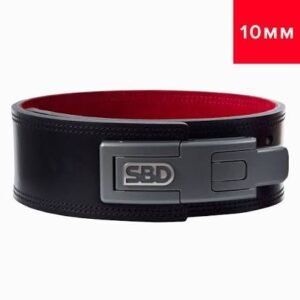
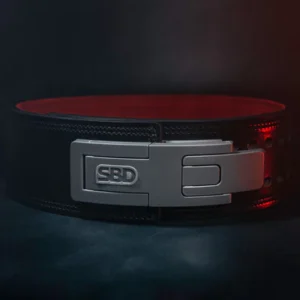
The belt is thick, probably the thickest out there. It uses stiff English leather. It has SBD’s red suede lining and black oiled outer layer. It is 13mm thick and 4 inches wide. There is almost no give. When you brace yourself into it, the belt feels like a wall but is a superb piece of craftsmanship.
The Catch: This belt is pretty pricey. It also takes time to break in. Give it 4 to 8 weeks. At first, the stiff leather can leave bruises on your hips.
Best For: Competitive powerlifters, serious squatters, and lifters who want one belt that can last for years.
2. Pioneer / General Leathercraft PAL V2 Lever Belt – The King of Micro-Adjustability
Pioneer (General Leathercraft based in Texas) is renowned for custom leather craftsmanship in powerlifting. For years, the major drawback of lever belts was that adjustment holes were spaced a full 1 inch apart. If your waist fluctuated by half an inch due to hydration or food, standard levers were either dangerously loose or suffocatingly tight.
Pioneer solved this with the PAL (Pioneer Adjustable Lever). The PAL uses an offset prong arrangement that allows 0.5-inch adjustments on the fly without needing to reposition the baseplate with tools. Hence, I call it "the king of micro-adjustability." The leather itself is vegetable-tanned sole leather, cut with clean edges and bonded with industrial nylon thread. Pioneer also offers unbacked treated leather ("Pioneer Cut"), double suede, and custom embroidery options. I had to look this up as well, and to make it easy to understand for my readers, a "double suede" means the belt has a layer of soft suede fabric wrapped around both the outside and the inside of the core leather. Instead of raw, exposed leather, the belt is fully sandwiched between two layers of suede.
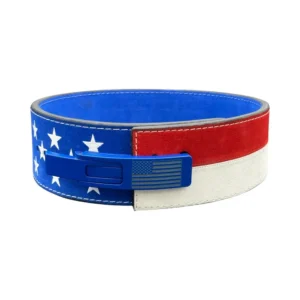
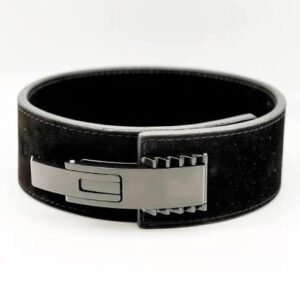
PAL V2 is available in two sizes.
- 10mm Belts: Great for general training and versatile support, offering a slightly easier break-in period while remaining widely approved in powerlifting federations.
- 13 mm Belts: Built extra thick and stiff for maximum core support under heavy loads. Kicks ass in short 🙂
The Catch: Depending on the specific federation you compete in, Pioneer-branded belts may not be approved in the strictly licensed IPF (though Pioneer PAL hardware is licensed on several IPF-approved brands like A7).
Best For: Strength athletes who want custom aesthetics, American craftsmanship, and precise 0.5-inch lever adjustments.
3. Rogue Ohio Lifting Belt (10 mm): The American-Made Single-Prong Classic
Rogue Fitness took a traditional approach with the Ohio Lifting Belt: 10 mm vegetable-tanned American hide, heavy brown edge-stitching, and a beefy single-prong buckle with a seamless steel roller. Unlike the stiff, chemically treated leather that feels like cardboard, the vegetable tanning process leaves the Ohio Belt supple right out of the box. It breaks in within just a couple of training sessions and develops a distinct, weathered patina over time.
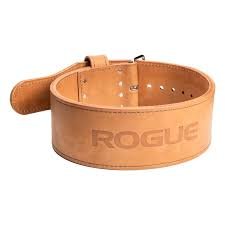
Because it uses a 10mm thickness, it offers balanced support. It provides plenty of rigidity for a 500 lb squat, yet flexes enough to prevent the lower edge from digging painfully into your pelvis at the bottom of a deadlift.
The Catch: Uncinching a tight single prong after an "As Many Reps As Possible" set requires a bit of technique (pushing the belt into an upright rack to pop the prong free).
Best For: If you want a durable, classic leather prong belt that breaks in fast and handles powerlifting, strongman, and heavy general strength work equally well.
4. Element 26 Self-Locking Weightlifting Belt – The Functional Fitness & CrossFit Pick
Try doing high-rep thrusters, burpees, and box jumps in a 13mm leather powerlifting belt, and you’ll quickly regret that decision.
A stiff 13mm belt is simply not designed for this kind of movement. The biggest problem comes when an exercise requires deep hip flexion. As you drop into the bottom of a squat or catch position, the rigid leather edge can dig into your pelvic crest and lower ribs, restricting your range of motion and making the bottom position uncomfortable.
This is where the Element 26 Self-Locking Belt shines. It provides the support you need without the rigidity and bulk of a traditional powerlifting belt, allowing you to move freely through deep hip flexion while still maintaining core stability.
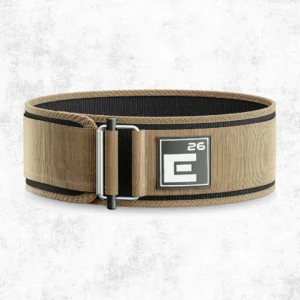
It is constructed from 100% premium nylon with a uniform 4-inch profile; the Element 26 relies on a full metal self-locking buckle mechanism. You slide the nylon strap through the roller, pull it tight to your exact circumference, and the roller pinches down automatically. The Velcro strap serves simply as a hold-down measure rather than taking the structural load.
The result is 360-degree contact around your waist that will not pop open during heavy Olympic lifts, combined with a quick-release roller that lets you loosen the belt in under a second between WOD stations.
The Catch: Keep in mind the E26 is not a powerlifting belt. If your primary goal is maximal 1RM powerlifting squats, nylon will yield more than heavy leather.
Best For: It will find home with CrossFitters, Olympic weightlifters (USAW compliant), and everyday gym-goers who want lightweight comfort and easy adjustability.
5. Inzer Forever Lever Belt (10 mm / 13 mm): The Indestructible Legend
Inzer Advance Designs is one of the original pioneers of the modern powerlifting belt. The "Forever Belt" earned its name because it is genuinely built to outlast its owner.
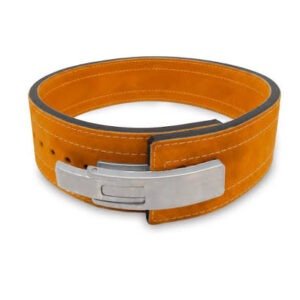
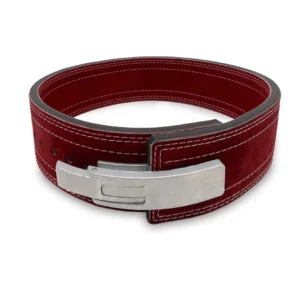
Constructed from four layers of solid leather tightly bonded and double-stitched with heavy nylon thread, the Inzer Forever belt is notoriously stiff. It features a heavy cast-metal lever buckle that locks down with a loud, satisfying snap.
Unlike the softer vegetable-tanned leather of the Rogue Ohio, Inzer leather feels almost like engineered lumber out of the box. Breaking in an Inzer is an initiation in itself, rolling it backward, flexing it over edges, and putting in months of heavy sets before it molds to your torso. Once broken in, however, few belts match its structural longevity.
The Catch: A fixed-hole lever means keeping a screwdriver in your gym bag for adjustments. Inzer’s factory lead times can also run long depending on color choices.
Best For: Lifters who want a proven, heavy-duty lever belt with decades of platform pedigree.
6. Gymreapers 10mm Lever Belt – The Best Mid-Tier Value
Gymreapers has established itself as an accessible, high-quality brand for strength athletes. Their 10mm lever belt bridges the gap between cheap entry-level Amazon belts and ultra-premium $250+ custom options.
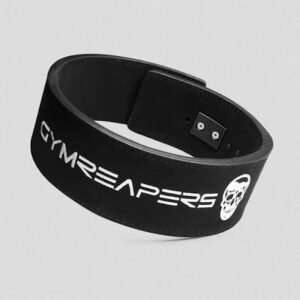
Made with genuine matte-finished leather and reinforced dual-stitching, the Gymreapers 10mm belt offers clean aesthetics, an IPF-approved competition pedigree, and a solid steel lever buckle. The 10mm thickness means you don't have to suffer through the punishing multi-month break-in of a 13mm belt, yet it provides ample stability for heavy triple-digit squats and pulls.
The Catch: The included standard lever is good but lacks the micro-adjustment sliding design seen on high-end SBD or Pioneer PAL systems.
Best For: Intermediate lifters stepping into serious powerlifting who want competition approval and high reliability without spending top dollar.
7. 2POOD Straight Weightlifting Belt – The Olympic Lifting & WOD Specialist
2POOD is the official belt of USA Weightlifting (USAW) and a common sight at the CrossFit Games.
The core feature of 2POOD belts is the WODClamp™—a quick-adjusting steel locking clamp that reinforces the Velcro strap and distributes shear stress away from the hook-and-loop material. This eliminates the risk of Velcro peeling open mid-snatch or during heavy clean-and-jerk receptions.
Available in a wide array of patterns, the straight 4-inch uniform width complies with all IWF and USAW competition rules. It stays completely flat against your abdomen, avoiding interference with the barbell during dynamic hip extension.
-
The Catch: Premium price for a nylon belt, but supported by competitive hardware.
-
Best For: Dedicated Olympic weightlifters and competitive functional fitness athletes.
8. Dark Iron Fitness Genuine Leather Belt – The Entry-Level Budget Pick
For lifters who want real leather without spending over $50, the Dark Iron Fitness belt is a perennial top-seller.
Unlike thick, stiff powerlifting slabs, this belt uses a much thinner (~4mm), pliable buffalo leather with a double-prong buckle. It is soft right out of the package, rolls up tight to fit in any backpack, and will not cause bruising.
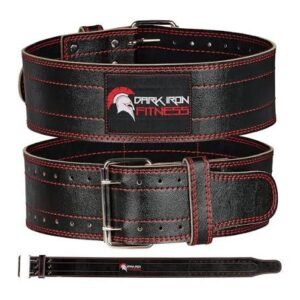
While it lacks the sheer rigidity needed to push for a 600 lb squat, it provides solid abdominal tactile feedback for lifters working through beginner and intermediate strength programs.
The Catch: The double-prong buckle can be finicky to secure, and the leather is too thin for competitive powerlifting.
Best For: Beginners, casual gym-goers, and budget-conscious lifters wanting their first leather belt.
Head-to-Head Comparisons
Alright, let's do an H-to-H comparison of the best belts
SBD 13mm vs. Pioneer PAL V2
-
Adjustability: Both solve the fixed-lever problem. SBD uses a smooth sliding track built into the lever body; Pioneer uses half-inch offset holes punched directly into the leather. Pioneer provides finer tuning in 0.5-inch steps, while SBD allows rapid jumps between wider settings.
-
Build Feel: SBD is exceptionally dense, clean, and heavily standardized. Pioneer offers unmatched artisan customization (leather finishes, suede colors, and edge treatments).
-
Competition: If you compete under the strict IPF umbrella, the SBD is fully certified. Pioneer PAL must be checked against your specific local federation roster.
Rogue Ohio 10mm vs. Inzer Forever Lever
-
Closure Dynamics: Ohio’s single prong is simple, infinitely reliable, and easy to adjust between different exercises. The Inzer lever offers rapid clamping but locks you into one size setting until you unscrew the plate.
-
Break-In Time: Rogue’s vegetable-tanned leather is supple within days. The Inzer Forever requires weeks of effort to break in.
-
Support: Inzer feels stiffer; the Rogue Ohio feels more comfortable around the rib cage.
Element 26: Self-Locking vs. 2POOD Straight Belt
-
Locking Mechanism: Element 26 uses a self-locking friction roller mechanism where tension locks the cam. 2POOD relies on heavy-duty Velcro backed by the physical WODClamp™ steel bar.
-
Versatility: Both perform exceptionally well in metcons and Olympic lifting. Element 26 is slightly simpler to release quickly with one hand; 2POOD offers extensive custom designs and official USAW licensing.
Sizing, Placement, and Break-In Guide
How to Measure for a Lifting Belt
Do not use your pant size. Pants sit low on your hips, while a lifting belt wraps around your midsection across your navel.
WRONG: Pant Waistline (Hips)   ───► [ 32" Pants ]

CORRECT: Belly Button Level    ───► [ 35" Belt Measurement ]
-
Take a flexible tailor's tape measure.
-
Wrap it snugly around your torso over your belly button (where the belt will actually sit).
-
Pull your stomach to a neutral, braced position—do not suck in your gut, and do not push your belly out artificially.
-
Match that exact circumference against the manufacturer’s sizing chart. Aim to sit right in the middle of a size bracket so you have room to tighten or loosen the belt.
Finding Your Ideal Placement
Belt placement varies based on anatomy and movement:
-
Squats: Most lifters wear the belt horizontally, sitting just over the navel midway between the bottom of the ribs and the top of the pelvis.
-
Deadlifts: Many lifters angle the belt slightly upward in the front or wear it a fraction higher on the torso. This prevents the bottom edge of the belt from catching on the thighs or pinching the hip flexors in the starting position.
-
Overhead Press: A standard horizontal or slightly lower placement gives a firm base to brace the anterior core and prevent lumbar hyperextension under heavy overhead lockouts.
How to Break In a Stiff Leather Belt
If you purchase a 10mm or 13mm leather belt, do not let its initial stiffness discourage you.
-
Roll It Inward and Outward: Spend 15 minutes tightly rolling the belt like a cinnamon roll from both directions. This softens the outer fibers without damaging the internal structure.
-
Wear It During Warmups: Put the belt on during warm-up sets, not just your heaviest attempts. Body heat and perspiration speed up the leather's molding process.
-
Store It in a Natural Loop: Never fold a leather belt flat or bend it sharply. Keep it looped in a loose circle inside your gym bag to maintain its cylindrical contour.
So which belt should you choose?
-
If you specialize in powerlifting Choose the SBD 13mm Lever Belt for unmatched platform stability and quick lever adjustability. If you want custom leather work and 0.5-inch micro-adjustments, pick the Pioneer PAL V2.
-
If you are an all-around strength athlete: Choose the Rogue Ohio Lifting Belt (10 mm). Its vegetable-tanned leather delivers reliable stability, easy prong adjustment, and lasting durability.
-
For CrossFit & Olympic Weightlifting: Choose the Element 26 Self-Locking Belt for fast transitions and secure locking, or the 2POOD Straight Belt for official USAW competition compliance.
-
If you're looking for a budget-friendly option: Choose the Gymreapers 10mm Lever Belt for competition-ready leather support at a sensible price point.
A quality weightlifting belt is an investment in your training safety and performance. Choose the belt that aligns with your primary discipline, learn how to brace your core effectively against it, and treat it as a tool to amplify your strength.